Share article
How to choose the right food waste caddy for you
Share article
As of 31st March 2026, in line with national legislation, every local authority is making weekly food waste collections. Find the right food waste caddy for your kitchen.


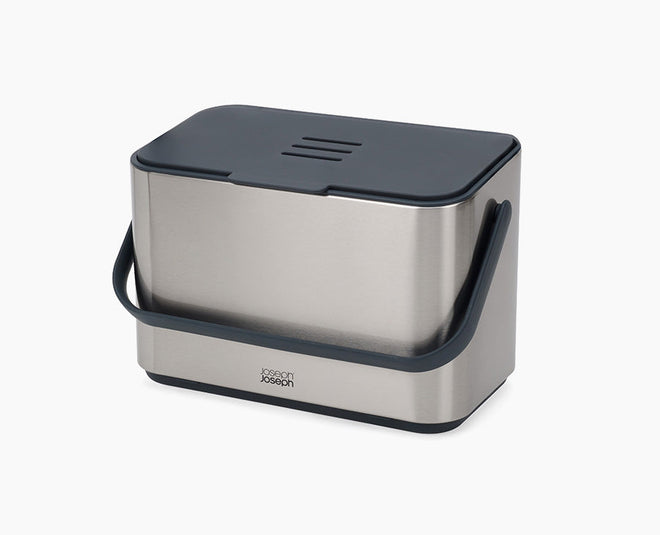
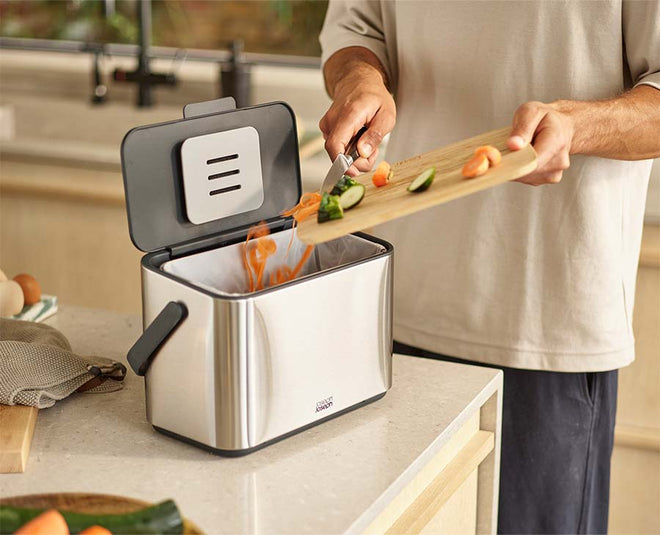 Translation missing: en.accessibility.product_link
£53.00
Collect™ 4L Stainless-steel Food Waste Caddy
What you need to know about the new legislation
Under the Simpler Recycling Legislation, local authorities are now required to collect the core recyclable waste streams from all households in England. This means introducing weekly food waste collections for most homes, including all flats and communal housing. Find the right counter top food waste bin for your kitchen.
What are the benefits of collecting food waste? What are the benefits of collecting food waste?
Food scraps make up a large portion of household waste. The benefits of proper food waste collection are many. Environmentally, diverting food waste to composting cuts methane emissions, via anaerobic digestion. Not only this, but food waste can be turned into compost which is a fantastic resource to improve soil health and crop yields without the need for synthetic fertilisers.
Food waste collection also raises awareness on a household level of overconsumption and food waste. When your food waste is made more visible to you, the drive to eat more sustainably and to produce less waste is more pressing. Being more aware of our shopping and cooking habits is only a good thing.Having a food waste caddy that makes food waste collection easier, more hygienic and cleaner helps a lot. Let’s have a look at the different options from our range:
Find the right food waste caddy for you
- A removable inner bucket to make emptying a breeze
- Stainless-steel stylish exterior
- Complete with an effective ventilated odour filter to keep nasty smells at bay
- Wide-mouth for easy plate scraping

- Wide aperture makes scraping food from plates easier
- Adjustable air vent: open - helps reduce moisture and odour build-up; closed - provides insect barrier
- Slimline design perfect for storing on the worktop or inside cupboards

- The unique ventilated design of this food waste caddy helps to reduce unpleasant odours from decomposing food
- Ventilated design reduces moisture and odours
- Replaceable odour filter in lid

Bundles with bags
With compostable liners and odour filters included, our food waste caddy bundles are everything you need to get started.


FAQs
How to clean a food waste bin (quick routine that actually works)
The best routine for keeping your food waste bin clean is to keep up a regular, simple cleaning cadence of a daily wipe down and a weekly thorough wash. Always dry down the caddy after you’ve cleaned it to prevent moisture build up and smells.
What bin does food waste go in?
The household food waste goes into a larger council-provided food waste bin. To keep this larger bin clean, it’s best to decant only food waste that’s been collected in a compostable bag (we offer our own here).
Where to keep a food waste bin (inside vs outside)
Ideally, you’d keep a small counter-top food waste caddy inside for everyday use, and keep your larger council-provided food waste bin outside (these are usually 23L so big enough to handle a week or two of food waste). Indoors food waste caddies are best positioned in the spot that you’ll use them most: that might be on your counter top or in a cupboard door in the area where you do most of your food prep. Our Joseph Joseph food waste caddies all have handles making them easy to move around the kitchen as you work.
What can I put in my food caddy?
Councils collect most food waste including: meat, fish, bones, dairy, bread, fruit/vegetable scraps, pasta, bread and rice, tea bags, and coffee grounds. You shouldn’t put any liquids, oils or fats in the food waste caddy. If you’re transferring to a compost bin, meat, dairy and fats should be avoided due to their tendency to attract pests and cause severe odours.
Food waste vs compost: what’s the difference?
Food waste can be disposed of in two ways: via a council food waste collection or via home composting. Composting is done in your own garden, and is a combination of kitchen waste, garden waste and ‘brown’ waste which includes household items such as cardboard, newspaper and egg boxes. It’s best to use a balance of ‘wet’ (kitchen and garden) and ‘dry’ (household cardboard) waste for the best results. Composting and food waste collection are both brilliant for the environment, with composting being a great choice if you are a keen gardener as it produces nutrient-rich soil feed. Either way, it’s advisable to collect your waste on a daily basis, so you can then transfer it to your food waste bin or compost bin once a week.
Where can I get a food waste bin?
Your council provides 5L food waste caddies for indoor use, and 23L larger caddies for outdoor collection. You can order these via your council website. While they are a good starting point, council-provided bins do not offer odour control or filtered ventilation, and they don’t have secure lids, so fruit flies can be a problem in the summer. Council-provided caddies can be bulky and are made from thin plastic so they don’t look great on the counter top. Buying your own bin offers alternative options, with better odour control, user-friendly opening for easy filling and attractive aesthetics. Explore our food waste caddy range here.
