Identifying the problems
Drying a large amount of clothes in a small space is logistically challenging. It’s hard to hang trousers, jumpsuits and dresses on traditional airers while also achieving good airflow. Often, airers can be made from flimsy metals that are liable to warp and damage after a few years of use too. With AirFrame™, we wanted to offer a solution to the problem of maximum capacity drying in a model that is truly built to last.
Designing the solution – the ideation phase
In our design phase for AirFrame™, we prioritised a model that offered generous hanging in an upright design, so that the footprint of the product was kept to a minimum. Using vertical space in this way solved the issue of drying clothes in a small place. The staggered rails were our solution to the problem of long garments being difficult to dry traditionally.


Prototyping is really important for us. It enables us to check the geometry and make sure that we can achieve a really neat fold, but with a smooth opening. With AirFrame™, we produced several mini prototypes to ensure the product was easy to open and close for the user.
The design process
-


High-capacity With 16m or 21m of drying space in a compact footprint, you can dry up to two wash loads, easily. Dedicated long-hanging rails make it much easier to hang long garments like trousers and skirts, and improves the airflow, and drying efficiency of your laundry.
-

Sturdy construction A locking mechanism offers stability to the product even when fully loaded, and a push-button makes the airer simple to get out and put away.
-


Easy portability The product’s foot doubles up as a convenient handle, which makes the airer easy to carry, to move and store away in your home.


Hung, dried and sorted
Shop our laundry range, designed to simplify and speed up your routine.


£115.00
AirFrame™ Max 21m Folding Airer with Long Garment Hanging Rails
Regular price
£125.00
£100.00
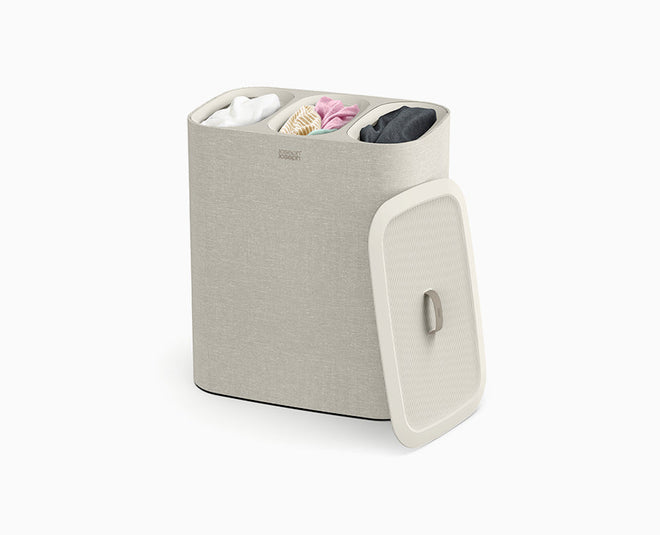
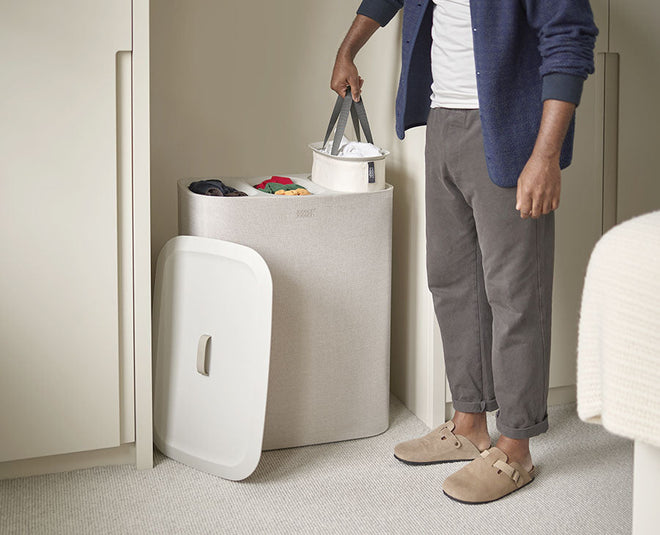
Tota Trio 90L Ecru Laundry Separation Basket


£99.00
AirFrame™ 16m Folding Airer with Long Garment Hanging Rails


Regular price
£135.00
£108.00
Eclipse™ 3-tier Ecru Clothes Airer with Screen


£16.00
Petal™ 32-piece Quick-grip Ecru Drying Hanger


£200.00
