Share article
Ultimate guide to buying kitchen knives
Share article
A good knife is an essential of any kitchen, and is a tool that most home cooks use multiple times a day. Choosing the right knife or knife set is important. We’re here to guide you through your decision.
A kitchen knife glossary


Blade
The blade refers to the entire length of the knife, excluding the handle.
Edge
The knife’s edge is its cutting surface, which might be serrated or straight, and which needs sharpening regularly.
Tip
The tip is the pointed end of the blade, which can be useful for fiddly tasks.
Spine
The spine is the top of the knife blade, on the opposite side from the edge. The thicker the knife’s spine, the stronger the blade. The spine thickness can affect a knife’s usability.
Heel
The heel refers to the part of the knife where the blade meets the handle. This can be part of the cutting edge.
Bolster
The bolster refers to the thicker part of the knife between the blade and the handle. Full bolsters prevent knives from bending, and help protect fingers.
Tang
The tang refers to the length of the knife that is attached to the handle. You can get ‘full’, ‘half’ or ‘whittle’ tangs, which refers to how far the blade extends into the knife’s handle. Full tangs are top quality and are visible on the outer edges of a riveted handle.
Handle
The knife’s handle comes in a variety of shapes and materials. The shape and weight of a handle have a big impact on usability.
Rivets
Rivets can be used to secure the tang of the knife to the handle. Joseph Joseph knives often include colour-coded rivets to help for easy knife selection from a block.
-


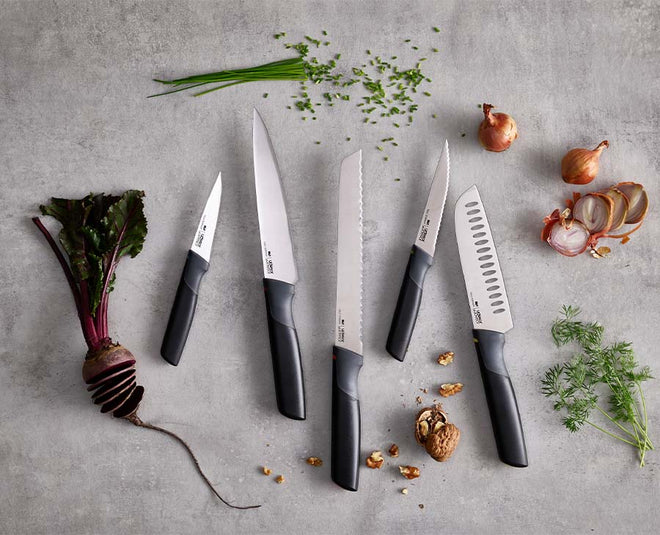
Paring knife A smaller, all-purpose knife, paring knives have sharp points and do well with precision and detail tasks, like peeling root vegetables, deseeding chillies, or top-and-tailing fruit and vegetables.
-


Serrated knife Designed with a precision-toothed edge that grips as it cuts, serrated knives make light work ingredients like ripe tomatoes and foods with tough skins, such as kiwis. Its sawing action delivers clean, effortless slices while helping to preserve delicate textures.
-


Santoku knife This increasingly popular knife originated in Japan. Santoku loosely translates as ‘three uses’: referring to the slicing, dicing and mincing that the knife is designed for.


-


Chef’s knife A multi-purpose knife that’s large enough to take on most vegetables, meat excellent at fine chopping. The blade has a straight edge which tapers towards the tip, allowing for a rocking motion while the other hand controls the food.
-


Bread knife A bread knife is the most common type of serrated knife. The saw like edge make it easier to cut through soft items like bread. Smaller serrated knives are great for using on softer fruits and vegetables like tomatoes, strawberries and grapes.
-


Cleaver Ideal for heavy-duty tasks like cutting through bones, the thick, heavy blade of a cleaver provides power and stability. Its durable design can handle tough ingredients without becoming brittle or damaged.


Choosing the right knife for your needs
Joseph Joseph knives all feature Elevate™ technology, a hygienic design feature that keeps blades off counter tops, saving on mess. When choosing the right knives for your needs, it’s best to consider the materials of the blade and the handle.
Stainless-steel blades are the most typical to be found in the modern kitchen, because they are durable and stand up well to frequent use. When choosing handle types, comfort and ease-of-use are important factors to consider. Stainless-steel handles are super easy to clean, while blades with plastic handles can be good for grip and ergonomics.


-


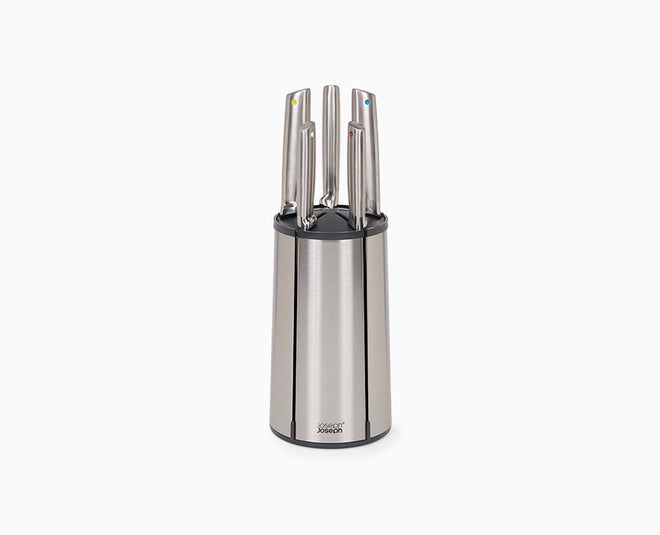
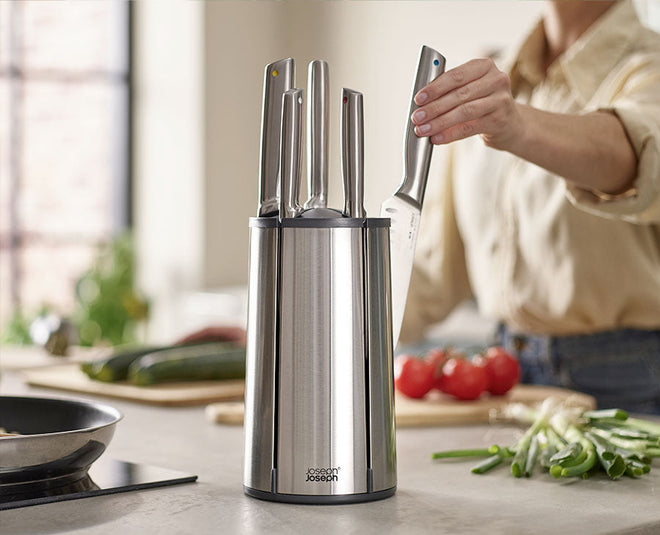
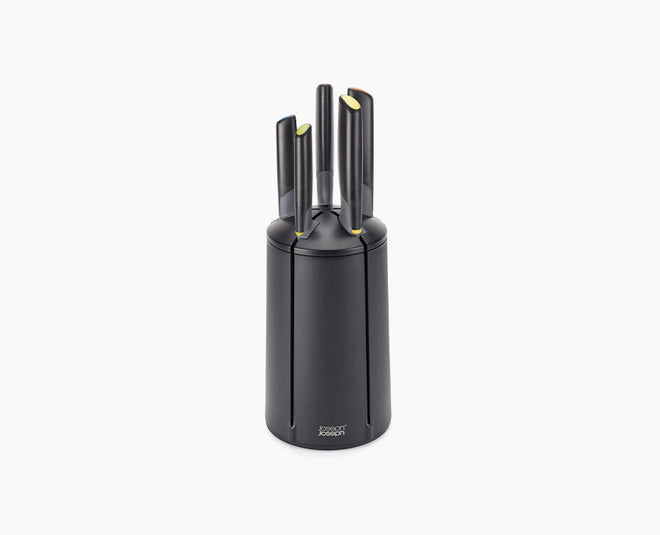
Elevate™ Steel Knives Carousel 5-piece Set
£180.00


-


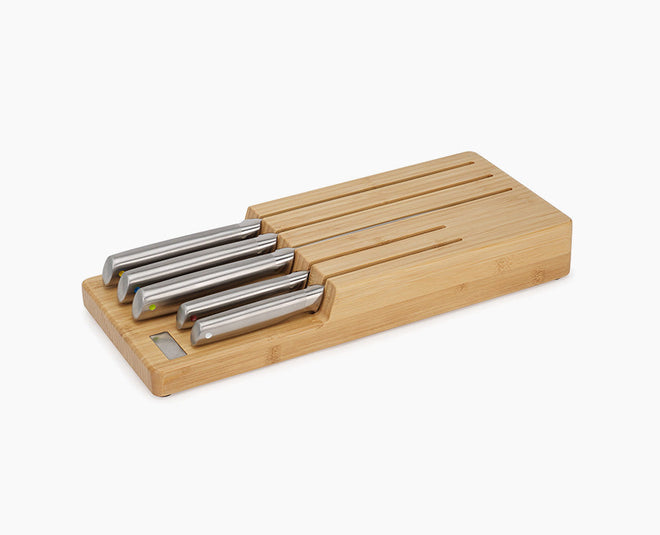
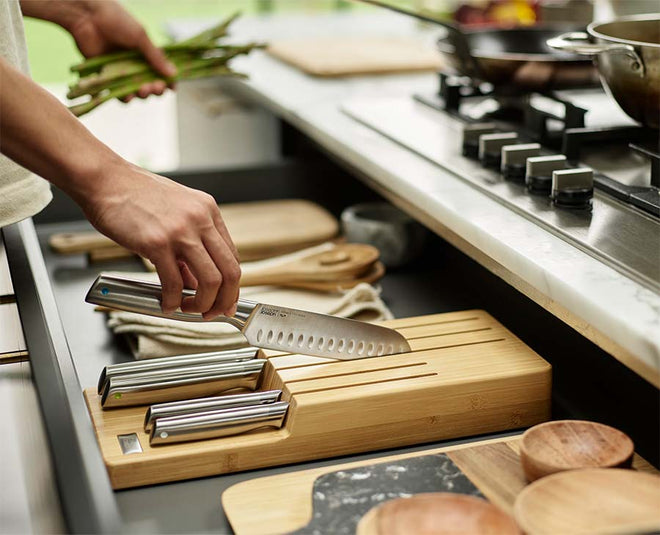
Elevate™ Steel Knife Set with In-drawer Bamboo Storage Tray
£135.00


Top knife picks by scenario
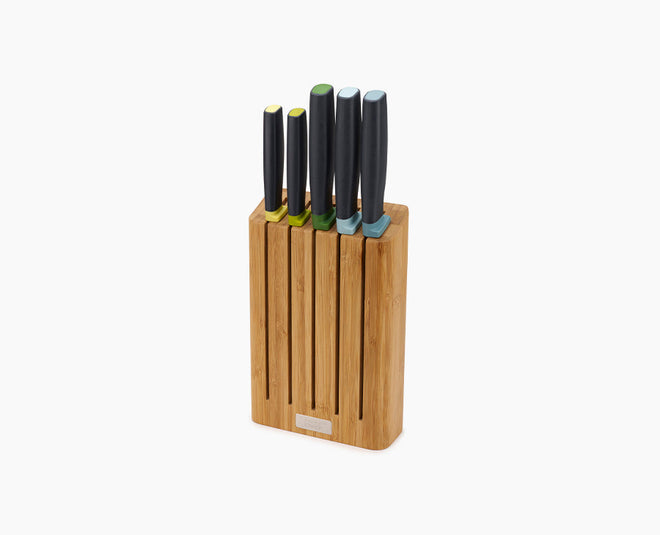
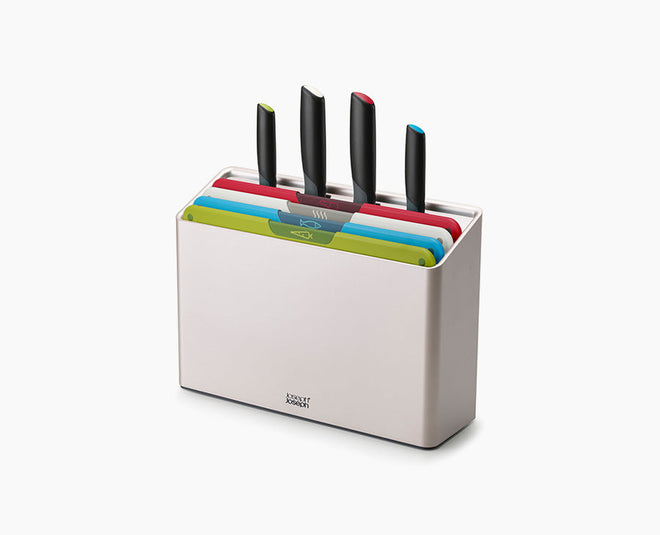
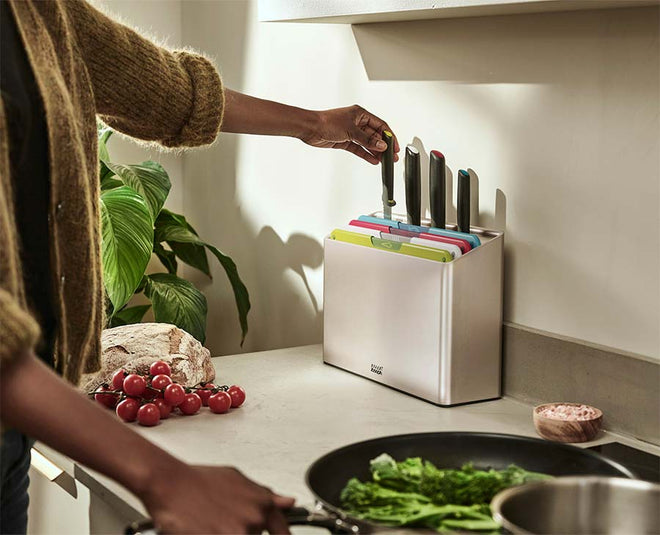
Choosing which knife set to opt for can be overwhelming. For the everyday home cook with a compact kitchen, a smaller set of 5 knives such as Elevate™ Carousel or Elevate™ Slim Block, which includes a sharpener in the base, is ideal. Both feature colour-coded handles to help reduce cross-contamination, while the space-saving storage solutions keep knives neatly organised on the worktop. The SlimBlock™ also includes an integrated sharpener in the base, helping keep blades in top condition between uses.
For someone preparing a lot of meat, fish or more complex, the Elevate™ 6-piece Multicolour Knives Set adds versatility with a wider selection of blade types. Like the rest of the Elevate™ range, each knife includes a weighted handle and integrated tool rest to help keep blades raised off the work surface for improved hygiene and less mess while cooking.
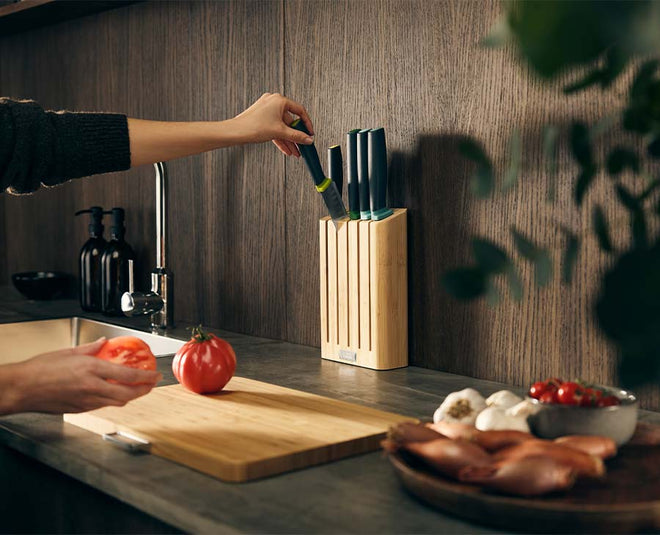
For a knife set that makes for a great gift, try Elevate™ Steel knives, make an impressive choice, featuring high-quality stainless-steel blades and elegant weighted handles, they're housed in a handsome bamboo storage block that looks great on the countertop.
FAQs
Can stainless steel rust or chip?
Stainless steel is incredibly durable in the kitchen which is why it’s the choice material for almost all knives. That said, too much exposure to harsh chemicals like bleach or salt can damage stainless steel, so be careful when cleaning your knives, and be sure to dry them after washing to prevent rust. Chipping is unlikely, but using knives not-as-intended on surfaces that aren’t intended for chopping may damage knife edges, so it’s best to use a dedicated chopping board.
What is the most versatile kitchen knife?
A chef’s knife or a utility knife is the best option if you’re looking for a versatile knife that can be added to your collection and perform most daily chopping tasks.
What cutting boards are best for edge retention?
Bamboo boards are good for edge retention as they don’t offer a harsh surface that will cause cutting edges to wear.
Upgrade your knife collection
Discover sets that keep knives sharp and organised
£135.00
Elevate™ Steel Knife Set with In-drawer Bamboo Storage Tray
£180.00
Elevate™ Steel Knives Carousel 5-piece Set
£105.00
Elevate™ Carousel 5-piece Multicolour Knives Set
£145.00
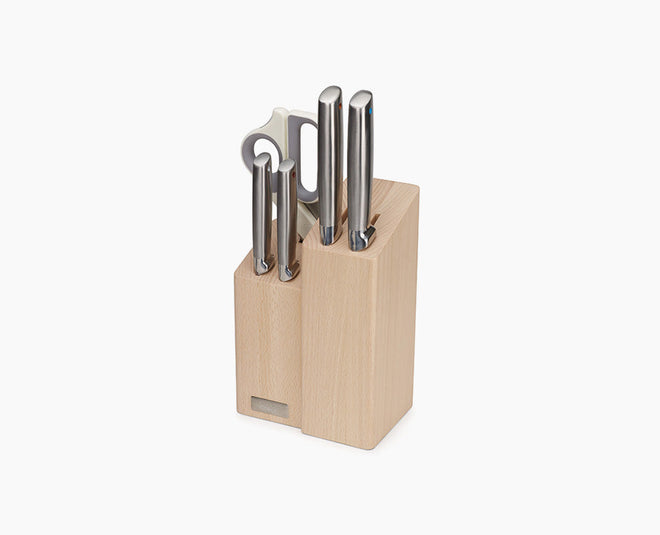
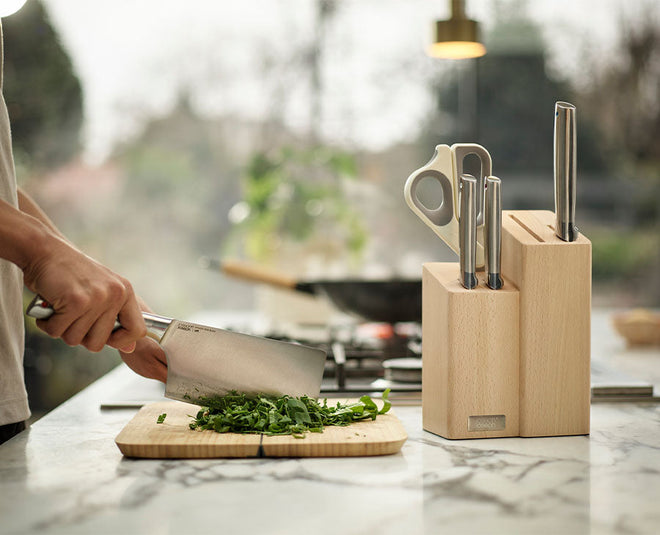
Elevate™ Fusion 5-piece Knife & Scissor Set with Beechwood Block
£100.00
